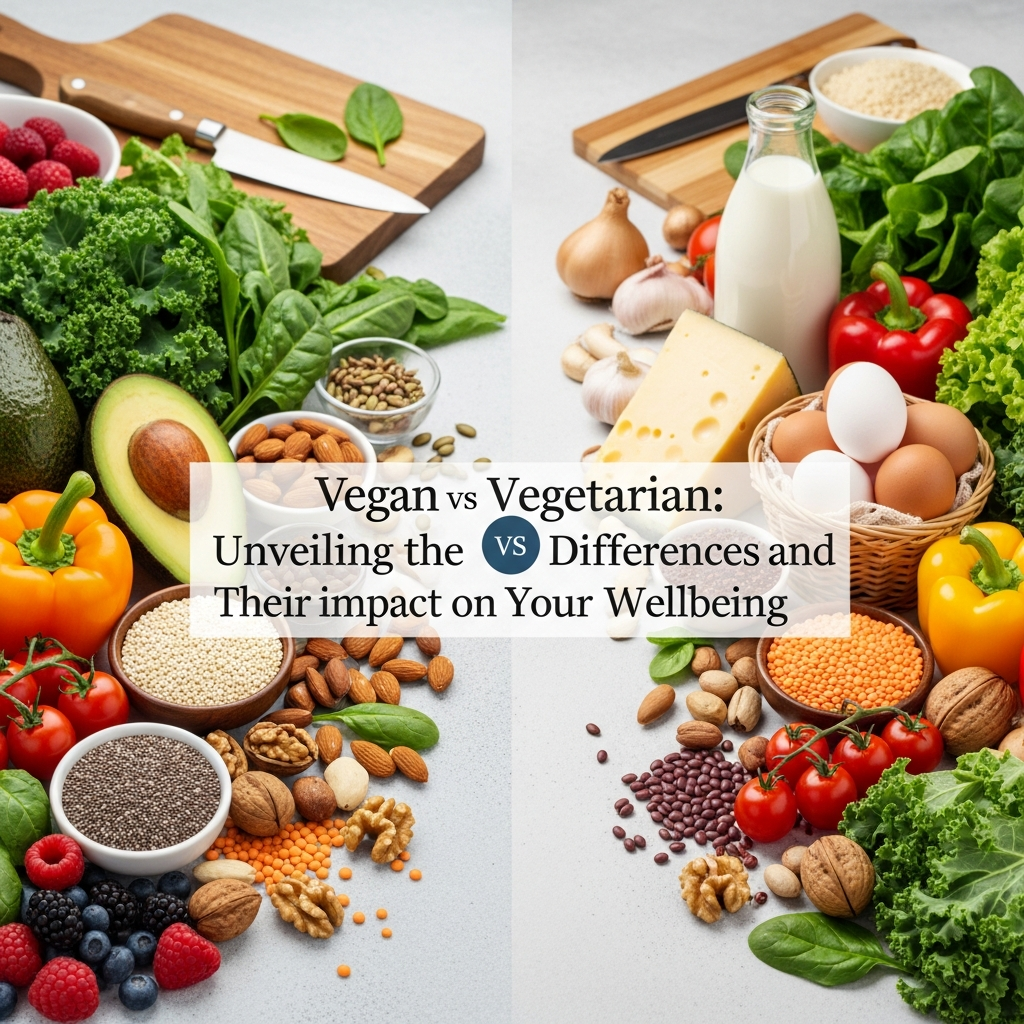
In an era increasingly conscious of health, ethics, and environmental impact, plant-based diets have surged in popularity. Among these, veganism and vegetarianism stand out as prominent choices. While often used interchangeably by the uninformed, these two dietary and lifestyle approaches have distinct philosophies and practical implications that significantly affect nutritional planning, ethical stances, and overall wellbeing. Understanding these nuances is crucial for anyone considering or navigating a plant-based path.
Defining the Diets: What Sets Them Apart?
At their core, both vegan and vegetarian diets exclude meat. However, the scope of exclusion is where they diverge dramatically. Vegetarianism, in its most common form (lacto-ovo vegetarianism), involves abstaining from all animal flesh, including red meat, poultry, and seafood. This means that while adherents do not consume animals that have been killed, they typically include animal by-products such as dairy (milk, cheese, yogurt) and eggs in their diet. Other subcategories exist, such as lacto-vegetarians (who consume dairy but not eggs) and ovo-vegetarians (who consume eggs but not dairy).
Veganism takes this a significant step further, extending beyond dietary choices to encompass a broader lifestyle philosophy. Vegans abstain from all animal products and by-products, without exception. This means no meat, poultry, fish, dairy, eggs, or even honey. The vegan ethos is rooted in the belief that animals should not be exploited for human consumption or use in any form. Consequently, vegans also typically avoid products derived from animals, such as leather, wool, silk, and cosmetics tested on animals or containing animal ingredients like lanolin or gelatin. This fundamental difference in scope reflects a deeper philosophical stance against animal exploitation across all facets of life.
Nutritional Considerations: The Vegetarian Advantage
For vegetarians, maintaining a balanced diet generally presents fewer nutritional hurdles compared to a fully vegan approach. The inclusion of dairy products and eggs provides convenient and readily bioavailable sources of essential nutrients that can be more challenging to obtain from an exclusively plant-based diet. For instance, dairy is an excellent source of calcium, vitamin D (often fortified), and vitamin B12, while eggs are a complete protein source, rich in choline, vitamin D, and B12.
These animal by-products also make it easier for vegetarians to meet their protein requirements, as eggs and dairy contain all nine essential amino acids. Iron, another crucial nutrient, can also be obtained from plant sources, but the heme iron found in meat is more readily absorbed. However, vegetarians can still achieve adequate iron intake through legumes, dark leafy greens, and fortified cereals, often enhanced by consuming vitamin C-rich foods to improve absorption. The nutritional flexibility offered by dairy and eggs allows for a relatively diverse and less restrictive meal plan, making the transition from an omnivorous diet smoother for many individuals.
Nutritional Considerations: The Vegan Challenge and Opportunity
Embracing a vegan diet, while offering significant health benefits, necessitates careful planning to ensure nutritional adequacy. The complete exclusion of all animal products means that certain nutrients, which are abundant in animal-derived foods, must be actively sought out through plant sources, fortified foods, or supplements. Vitamin B12 is perhaps the most critical nutrient to supplement for vegans, as it is primarily found in animal products and its deficiency can lead to severe neurological damage. Vitamin D, calcium, iron, iodine, zinc, and omega-3 fatty acids (specifically EPA and DHA) are other nutrients that require conscious attention.
Despite these potential challenges, a well-planned vegan diet can be incredibly nutrient-dense and offers a host of health advantages. Rich in fiber, vitamins, minerals, and antioxidants, vegan diets are consistently linked to lower risks of chronic diseases such, as heart disease, type 2 diabetes, certain cancers, and obesity. They tend to be lower in saturated fat and cholesterol, contributing to better cardiovascular health. By focusing on a wide variety of whole plant foods – fruits, vegetables, legumes, whole grains, nuts, and seeds – vegans can thrive, often reporting increased energy levels and improved digestive health. The key lies in education and intentionality, ensuring a diverse intake of plant foods and strategic supplementation where necessary.
Ethical, Environmental, and Lifestyle Impacts
Beyond individual health, the choice between veganism and vegetarianism often stems from ethical and environmental considerations. Both diets significantly reduce an individual's impact compared to an omnivorous diet. Vegetarians, by abstaining from meat, directly reduce demand for animal slaughter, addressing a primary ethical concern for many. From an environmental standpoint, livestock farming is a major contributor to greenhouse gas emissions, deforestation, and water pollution. Eliminating meat from the diet substantially lowers one's carbon footprint.
However, veganism takes these considerations further. By eschewing all animal by-products, vegans extend their ethical stance to protest the exploitation inherent in the dairy and egg industries, which often involve practices like culling male chicks, separating calves from their mothers, and the eventual slaughter of spent laying hens and dairy cows. Environmentally, the production of dairy and eggs also carries a significant footprint, albeit generally lower than that of meat. Therefore, a fully vegan diet typically results in an even smaller environmental impact. From a lifestyle perspective, both diets may require adjustments in social settings and food choices, though the increasing availability of plant-based options has made navigating both vegan and vegetarian lifestyles significantly easier in recent years.
Conclusion
Both veganism and vegetarianism are powerful dietary and lifestyle choices that offer compelling benefits for personal health, animal welfare, and environmental sustainability. The fundamental difference lies in their scope: vegetarians abstain from animal flesh, while vegans extend this to all animal products and by-products, driven by a philosophy against animal exploitation. Nutritionally, vegetarianism often provides an easier pathway to nutrient adequacy due to the inclusion of dairy and eggs, while veganism demands more meticulous planning and strategic supplementation for certain nutrients like B12, iron, and calcium. Ultimately, the optimal choice depends on an individual's personal values, health goals, and willingness to adapt. Both paths, when well-executed, can lead to a healthier, more conscious, and impactful way of living.